Strong Vision-Language Answers at MoE Speed — 35B Total, ~3B Active
MiniCPM-V 4.7 35B A3B is the first mixture-of-experts model in OpenBMB's MiniCPM-V series: 35B parameters, about 3B active per token. Ask it about one image, several images at once, or plain text, and it answers in text. OpenBMB reports it scores higher overall than Qwen3.6 35B-A3B in less inference time. Apache 2.0.
📸 See it in action
Who ate my sandwich? Two images in one call: a lineup of three suspects (Image 1) and the crime scene (Image 2). downsample_mode set to 4× so small details like a lettuce leaf survive.
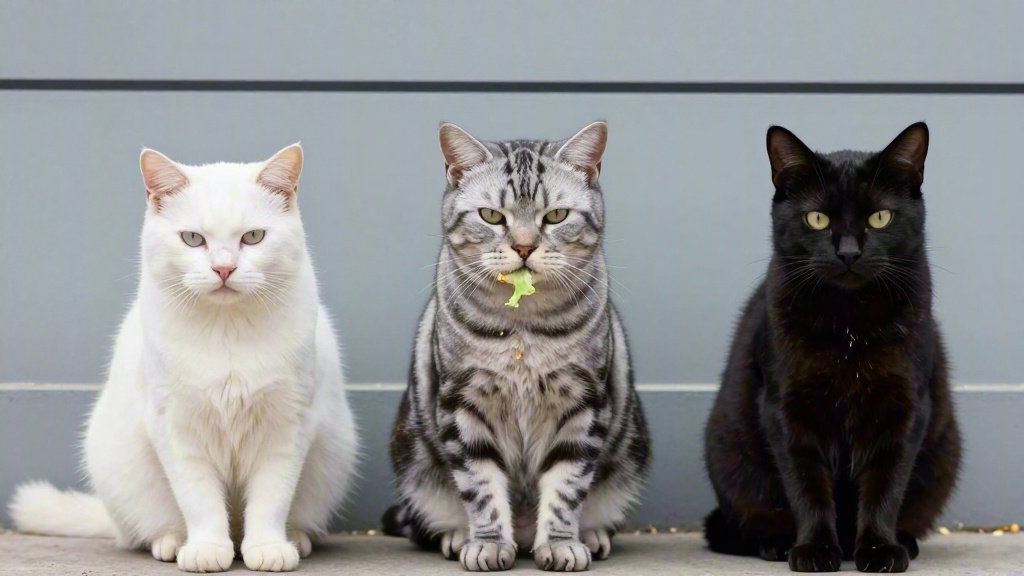
Image 1 — the lineup
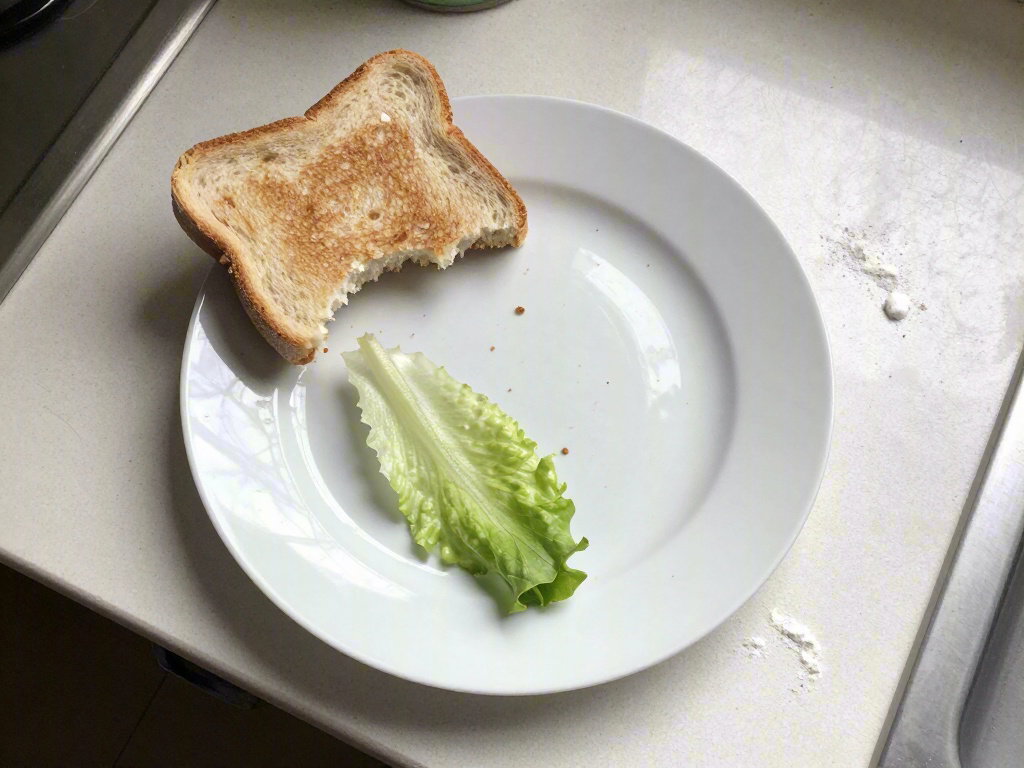
Image 2 — the crime scene
Prompt
Image 1 is a police lineup of three suspects. Image 2 is the crime scene: someone ate my sandwich while I was out of the kitchen. Which cat did it? Name the suspect by position and color, and explain your evidence like a detective closing the case.
MiniCPM-V 4.7 35B A3B's answer (unedited)
Based on the evidence presented, I can confidently close this case.Suspect: The middle cat, the silver tabby.
Evidence:
- Physical Evidence at the Crime Scene: Image 2 shows the crime scene, a plate with a partially eaten sandwich and a single, distinct leaf of lettuce.
- Suspect Connection: In Image 1, we see the three suspects. The middle suspect, the silver tabby cat, has an identical piece of lettuce hanging from its mouth.
- Conclusion: The presence of the specific piece of lettuce from the sandwich on the suspect's mouth is conclusive evidence. The white cat on the left and the black cat on the right are clean and show no signs of involvement. Therefore, the silver tabby in the middle is the culprit who ate the sandwich.
Both images made with Z-Image-Turbo in CNAPS Studio. The answer is the model's real output from one run.
What it does
MiniCPM-V 4.7 35B A3B takes a text prompt plus up to three images and returns a text answer. Because only about 3B of its 35B parameters run per token, it answers faster than a dense model of similar quality.
It shares its vision tower, processor and chat template with the 1B model — only the language decoder differs. So it has the same 16× / 4× compression switch: 16× (default) for speed, 4× for small text, dense diagrams and fine detail.
It is the heaviest model in the family (about 70 GB of weights), but in CNAPS Studio it runs on our GPUs — nothing to set up.
Problem it solves
Use case | How it helps |
Detailed image analysis | Descriptions, product attributes, scene understanding |
Compare up to three images | Before/after, A/B variants, multi-angle product shots |
Charts, diagrams, screenshots | Switch to 4× mode to keep small text readable |
Reasoning over images | Turn thinking on for multi-step visual questions |
Text-only reasoning | MMLU-Pro 83.45 per OpenBMB |
Input/Output
Input
- Text (required) — the prompt or question
- Image 1–3 (optional) — up to three images, read together with the prompt
Parameters
Parameter | Details |
max_new_tokens | 1–8192, default 1024 (advanced). Cap on response length. Raise it for long answers or when thinking is on |
temperature | 0–2, default 0.0 (advanced). Greedy and deterministic. Above 0 turns on sampling (OpenBMB's instruct-mode suggestion is 0.7) |
top_p | 0–1, default 0.95 (advanced). Ignored at temperature 0 |
top_k | 1–100, default 100 (advanced). Ignored at temperature 0 |
downsample_mode | 16x (default) / 4x (advanced). 16x is fast and fine for ordinary questions. 4x keeps 4× more visual tokens for small text and fine detail, at more time and memory per image |
enable_thinking | On / Off (default, advanced). On writes a reasoning block first — helps on multi-step visual questions; raise max_new_tokens with it |
Output
- Text — the generated response
Benchmarks
Benchmark | Score |
MathArena AIME 2026 | 76.46 |
MMLU-Pro | 83.45 |
Provider-reported results from OpenBMB's model card, not measured in CNAPS Studio.
Technical Details
Architecture | Mixture-of-experts language decoder + SigLIP2 vision encoder with intra-ViT early token compression (from LLaVA-UHD v4) |
Parameters | 35B total, ~3B active per token |
Weights | ~70 GB (bf16) |
Compression | 16× (default) or 4×, selectable per request |
Upstream inputs | Single image, multi-image and video. This node exposes text and three image ports; for video use the Video Analysis (Gemini) node |
Runtime | GPU, cloud — no local setup |
Compliance & Provenance
Provider | OpenBMB |
Provider type | Open-source |
License | Apache 2.0 |
EU AI Act risk class | Limited Risk |
Art. 50 transparency | Applicable — multimodal LLM output carries the AI-generated label |
Region availability | Available globally |
Training data summary | Pending — provider has not yet published per Art. 53(d) |
For more on how we classify models and mark outputs, see our AI Policy.
Model Source
- Model card
- GitHub: https://github.com/OpenBMB/MiniCPM-V
- License: Apache 2.0
How MiniCPM-V 4.7 35B A3B compares
Model | Best for | Notes |
MiniCPM-V 4.7 35B A3B | Strong image Q&A, up to 3 images, MoE speed | 35B / ~3B active |
Qwen3.6-35B-MoE | Coding, agentic tasks, step-by-step reasoning | SWE-bench Verified 73.4% |
Gemma 4 31B | General reasoning default | MMLU Pro 85.2% |
Qwen3.8-27B | Very long inputs | 262K context |
MiniCPM-V 4.7 1B | Same family, fast and light | Smallest option |
Mage-VL | Documents and charts | 4B; DocVQA 95.14 |
Rough guidance: try MiniCPM-V 4.7 35B A3B when you need several images in one call or a fine-detail mode; Gemma 4 31B stays the general default, Qwen3.6 for code. Scope notes come from each node's own documentation; the models have not been benchmarked against each other inside CNAPS Studio.
All of these run inside CNAPS Studio — compare them side-by-side.